During Eid celebrations, the whole family gathers at home—my older siblings and younger siblings all come back. I usually take advantage of this time to cook a big meal, prepare meat and chicken, and the dining table is usually filled with food, not to mention the various cookies that are a must. This moment has become a customary celebration tradition where everyone returns home to gather. Since I still live with my mother, her house naturally becomes the gathering place.
Usually, one day before the big day, I’m busy cooking for the upcoming holiday. I prepare a lot of food, including those cookies, which I started making a week ago.

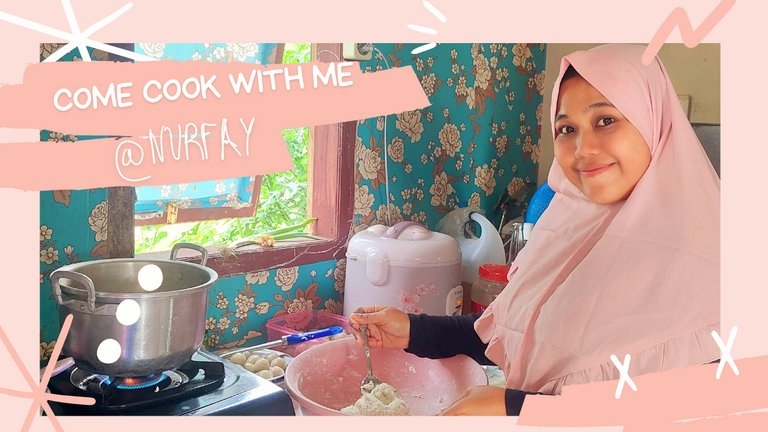
Now, for tomorrow’s main dish, I plan to make my own lontong. Lontong is rice cooked for hours wrapped in banana leaves. It’s usually enjoyed with various side dishes—soup, noodles, tauco, rendang, and others.
Usually, I buy lontong every year, but this time I plan to make it myself. I’m not sure why, but I really love trying new things—making lontong has been on my to-do list for a long time. After seeing tutorials on social media, I decided to give it a try this time. Even though I’m feeling tired, I have to do this because it’s truly enjoyable.

This first attempt had me feeling very anxious and worried that I might fail, but I was so happy when, after a long process, the lontong turned out perfectly cooked.
Ingredients
Next, I’ll guide you through making lontong. The ingredients are quite simple—you just need to prepare 1 kg of rice, washed until clean, then drained until dry. Second, you’ll need wide banana leaves; to make wrapping easier, you can sun-dry or briefly toast them over a flame to soften the leaves. Of course, you’ll need bamboo skewers to secure the leaves—this is essential because, in my opinion, using anything else would be much more difficult.


Cooking Procedure
- Procedure for Making Lontong
First, I make the leaf wrappers. To ensure they’re uniform, I use a pipe as a guide and secure the ends with toothpicks.


Fill the prepared banana leaves halfway with rice. Then tie them tightly with toothpicks to ensure the leaves don’t tear and the rice doesn’t spill out during boiling.


Prepare a larger cooking pot, then place the prepared lontong inside and add water until it’s fully submerged. Cook in a wood-fired stove; the cooking process takes a long time, about 5 to 6 hours. If the water level drops during cooking, simply add more. The fire doesn’t need to be too intense—the key is to keep the water boiling throughout the cooking process.


After 6 hours, I start removing the lontong and drain it until the water is completely dry. Since this is meant for tomorrow, I leave it standing overnight so the lontong stays nice and firm.


Just look at the beautiful result—the lontong is evenly cooked, with no uncooked rice grains; everything turned out perfectly. It’s perfectly cooked, chewy, and soft—not hard at all. I absolutely love the result.


After making the lontong, I prepared the broth and the other side dishes. I cooked the various side dishes for the lontong the night before. I didn’t record the entire process; I’ll just explain the key steps in preparing each of the side dishes.
- Boiling the Noodles
First, I boiled the thin noodles. Lontong is traditionally enjoyed with these thin noodles; in my opinion, other types of noodles just don’t pair well with it. Cook the noodles until they’re fully cooked. I think there’s too much noodle in this one package—half a package would be enough.
 |  |  |
|---|
- Lontong Lodeh Broth
Next, I prepare the seasoning for the lontong broth. The ingredients are quite simple: just 6 bird’s eye chilies, 7 red chilies, 3 cm of turmeric, 3 cloves of garlic, 4 shallots, and 2 candlenuts. For aromatic herbs: 1 stalk of lemongrass, 1 kaffir lime leaf, and 2 bay leaves. As for the vegetables, I add 2 chayotes and 20 melinjo leaves. And also about 2 liters of coconut milk—it doesn’t need to be too thick


Blend all the spices until smooth, then sauté them in a little oil in a pan until dry. Don’t forget to add the aromatic leaves: lemongrass, kaffir lime leaves, and bay leaves. If available, you can also add star anise or cinnamon.


Then combine the coconut milk, all the vegetables, and the sautéed spices in a pot, and cook until tender and boiling. Season with salt, or add a little mushroom broth if desired.


- Shrimp Tauco with Green Chili
Now, this is my favorite dish: shrimp tauco with green chili. In my opinion, lontong just isn’t the same without it. It’s made simply by stir-frying, but it’s that delicious.

Ingredients: 300 grams of shrimp, 40 grams of green chili, 2 tomatoes, 4 cloves of garlic, 2 shallots, 50 grams of tauco, and 1 stalk of lemongrass.
Chop all the ingredients; slice the green chilies diagonally, and mince the garlic by hand. Then sauté the garlic in enough oil—don’t forget to add the lemongrass.


Add the shallots and diced tomatoes Add the shrimp, then add the tauco; use only the tauco beans and rinse the tauco to reduce the saltiness.


Finally, add the green chilies, pour in a little water, and cook until done. Adjust the seasoning—if the flavor isn’t quite right, you can add a little salt.


- Fried Tempeh and Medan Anchovies with Sambal
Since tempeh and Medan anchovies don’t require many ingredients, I intentionally made this fried sambal with a stir-fry using minimal seasoning.

The ingredients are quite simple: 2 blocks of tempeh, cut into small pieces; 20 grams of Medan anchovies; 1 clove of garlic; 1 shallot; and sweet soy sauce to taste.


Fry the tempeh and anchovies until they’re dry, fully cooked, and perfectly crispy. Then, sauté the garlic, add the soy sauce, and cook the tempeh and anchovies until dry.
Result

I arranged everything on the table so we could eat together, carefully setting it all out to make it easier for us to enjoy later. I cut the lontong into small pieces and placed them in all the containers on the table. I’ve prepared the full spread, including sambal goreng, crackers, and fried onions.


Once everything was ready, I made one serving for my husband and arranged it neatly so I could take a photo. My husband couldn’t wait to try my homemade lonyong, and I served it with this rebdang meat—it was absolutely perfect.

The perfect finishing touch to a meal—it feels so wonderful to enjoy a dish I’ve made myself with such satisfaction. Don’t even think about how exhausting it was to do everything on my own. The process of preparing the ingredients took a lot of time, and then cooking each dish one by one at home. When it was served on the plates and everyone enjoyed it heartily, it was all worth it.
 |  |  |
|---|
The result was so perfect—the broth was just right, the flavor was spicy, savory, and full of umami, and the texture of the lontong was perfect; everything was just right on the palate. Hopefully next year I can make it again and go through all this cooking preparation.

About The Author
Welcome to this blog, I have a real name "Nurul", who comes from Indonesia. I have several hobbies, reading, writing, gardening, I also love food and cooking, even art related. And the most interesting one is spending the whole day traveling. From those hobbies, I will some inspiring content for all of you, I hope you like my blog, please and reblog this post if you like it!.